

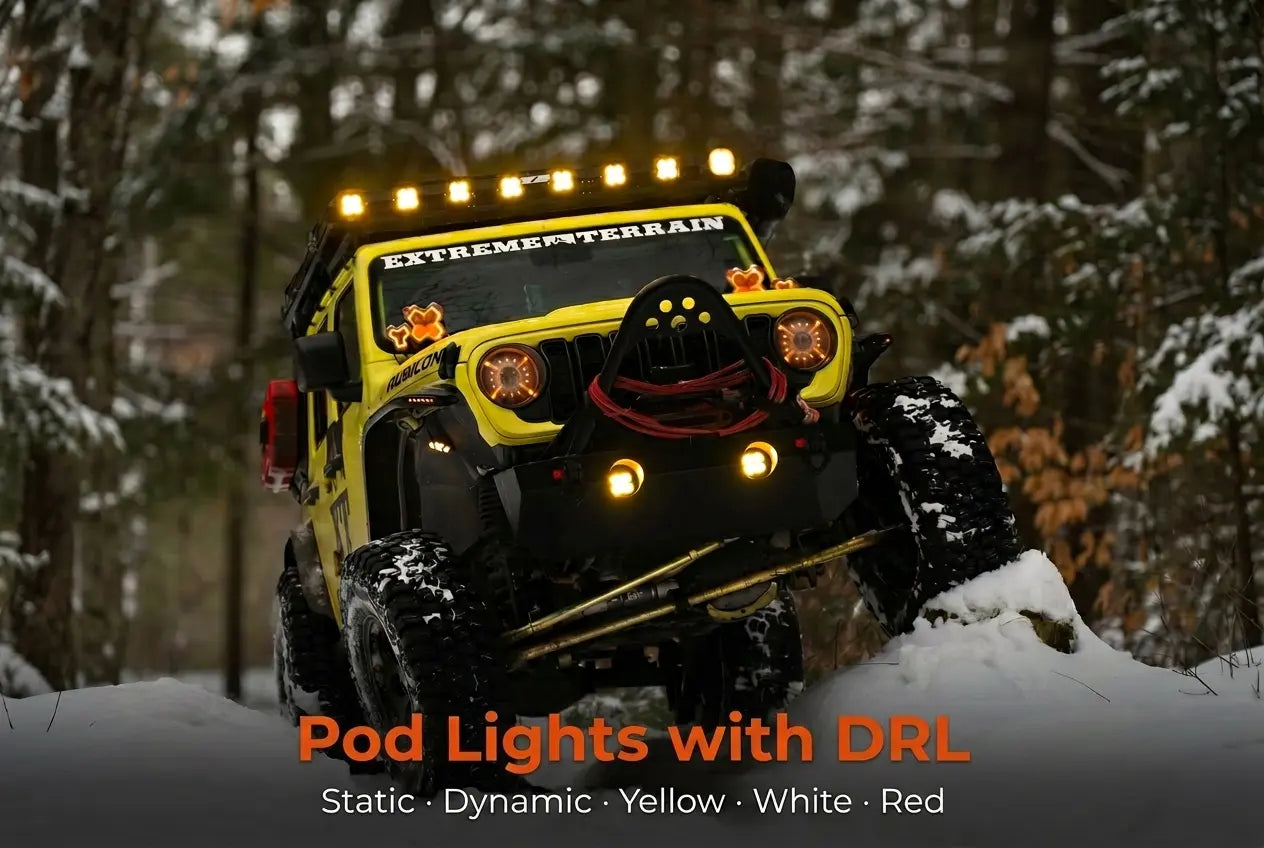
If you're shopping for LED pod lights with DRL, you've probably noticed that not all DRL setups are the same. Some glow static white. Some pulse and chase. Some are yellow. Some are red. The differences aren't just cosmetic — they affect how you wire the lights, how they behave every day, and whether they're street-legal.
This guide focuses specifically on the DRL side of pod lights: what each type does, which one fits your build, and how the wiring actually works. If you're earlier in your research and want a broader overview of pod lights in general, start with our LED pod lights buyer's guide.
What DRL Actually Does on a Pod Light
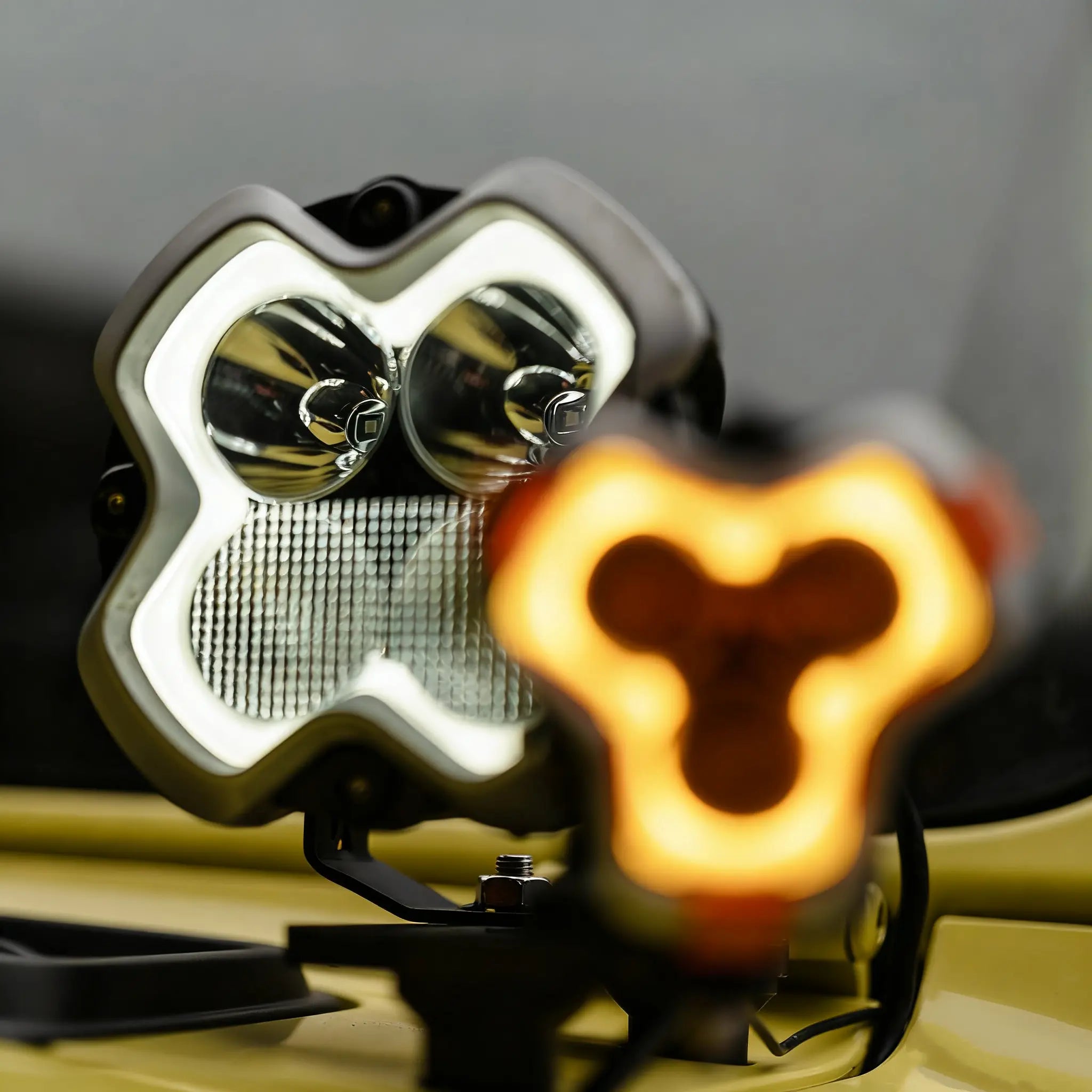
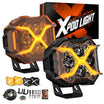
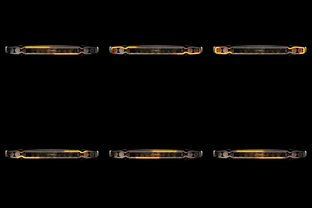
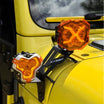
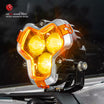
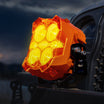
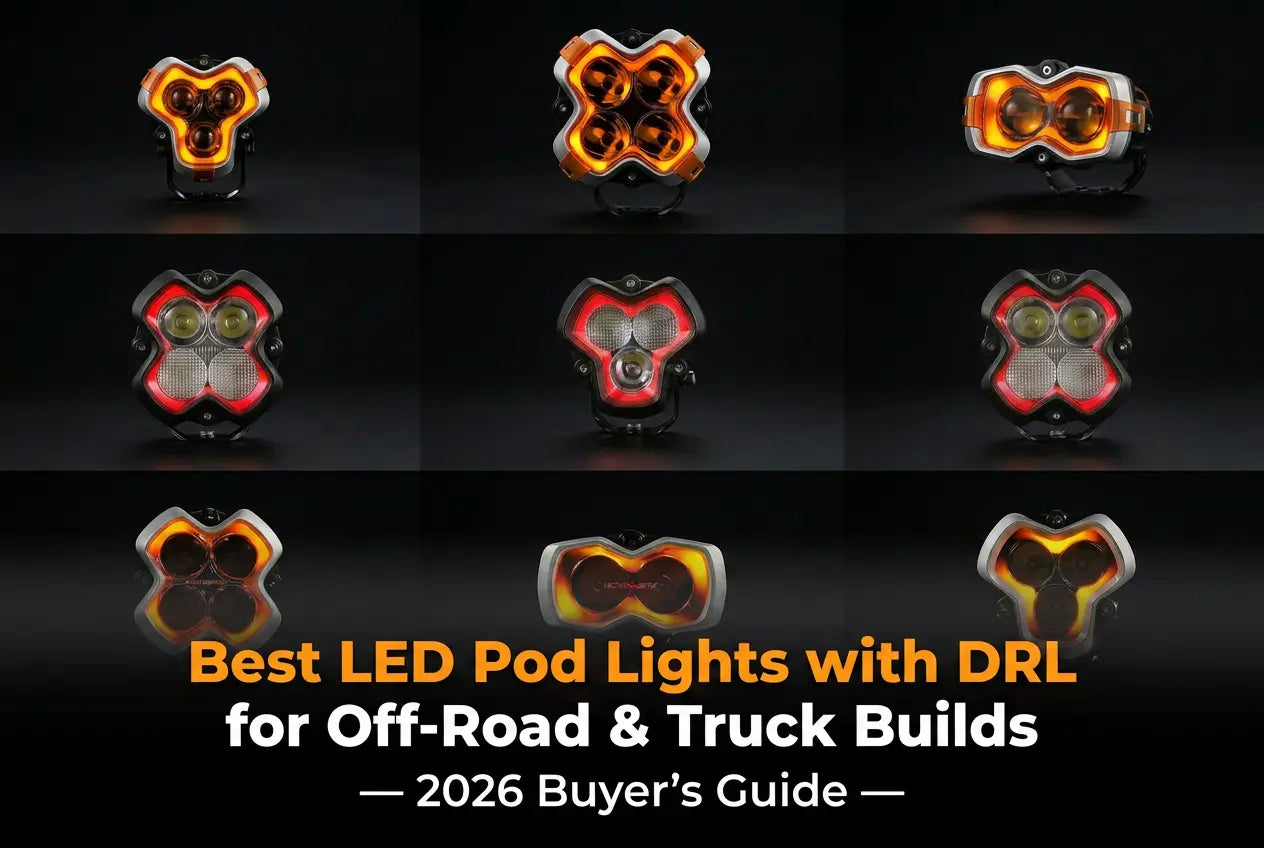
DRL stands for Daytime Running Light — a low-power light that stays active during the day to make your vehicle more visible to other drivers. On NOVSIGHT's HALO Series, the DRL takes the form of an illuminated ring surrounding the main lens. It's the part that glows when the main beam is off, and it's one of the HALO Series' defining design features. (On the X-Series, the DRL runs as an X-shaped light strip across the face of the housing — a different form, same function.)
That distinction matters: the DRL and the main beam are two separate circuits. The DRL runs at low wattage (typically 3–8W per light) off your vehicle's ACC circuit. The main beam runs at full wattage (30–80W depending on size) off a dedicated switch. You can run DRL without the main beam. You can run the main beam without the DRL. Most builds run DRL all day and main beam only when driving in darkness or on trail.
How pod light DRL differs from factory DRL
Your factory DRL activates automatically at a fixed brightness on a fixed circuit — no input required. Pod light DRL is more flexible: you choose when it activates (ignition on, parking light on, or manual switch), what color it runs, and in the case of dynamic DRL, which animation pattern it displays.
This flexibility is what makes pod light DRL genuinely useful beyond aesthetics. A yellow DRL running automatically when you start the vehicle makes your rig more visible in dust or fog without any extra steps. A dynamic DRL makes your vehicle instantly recognizable on a crowded trail or at a show. A red DRL on a blacked-out rig is a deliberate design signature that no factory option can replicate.
What DRL doesn't do
DRL is not a substitute for your main beam at night — it's not bright enough to illuminate the road. It's not a fog light. It doesn't replace your headlights. Its function is visibility to others during the day and identity at all times. Keep those roles clear and you'll make a better buying decision.
Static DRL vs Dynamic DRL: Which One Is Right for You?
This is the biggest DRL decision you'll make. Static and dynamic DRL serve different purposes and appeal to different types of builders.
Static DRL
The ring glows at a fixed brightness. It's on or off — no animation, no variation. This is the most common DRL type on pod lights, and for most daily-use builds, it's the right choice.
Static DRL is better when:
- Your build is used daily and you want lighting that's subtle and purposeful
- You drive in varied conditions (dust, rain, fog) and need reliable visibility without distraction
- You prefer the lighting to do its job without drawing attention to itself
- You're running yellow/white switchable DRL — the color switch is the feature, not the animation
The NOVSIGHT HALO Standard uses static yellow/white DRL. It's practical, clean, and integrates invisibly into daily driving.
Dynamic DRL
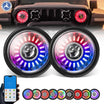
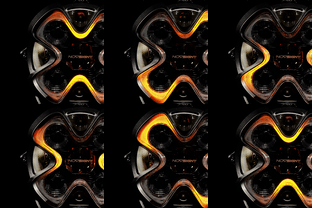
The ring animates through patterns: sequential fill, chase effects, breathing, strobing, and combinations. The NOVSIGHT HALO PRO offers 7 distinct dynamic modes, all selectable via the included controller.
Dynamic DRL is better when:
- Your build has a clear visual identity you want to reinforce
- You attend shows, meets, or events where standing out matters
- You run multiple vehicles and want a distinctive identifier on trail
- The DRL is as much a design element as a functional one
Dynamic DRL is not better when:
- You primarily drive on public roads and want to avoid drawing unnecessary attention from law enforcement
- You drive in areas where animated lighting may distract other drivers
- Subtlety is part of your build's intent
Wiring complexity: is dynamic harder to install?
Not significantly. Both static and dynamic DRL wire to the same ACC circuit. The difference is that dynamic DRL includes a separate controller module that sits between the harness and the DRL ring — this is where you select the animation mode. Installation adds one extra connection and takes roughly the same amount of time as static DRL.
Yellow DRL vs White DRL: Does the Color Actually Matter?
Yes — and the difference is more practical than most people expect.

Why yellow cuts through conditions better
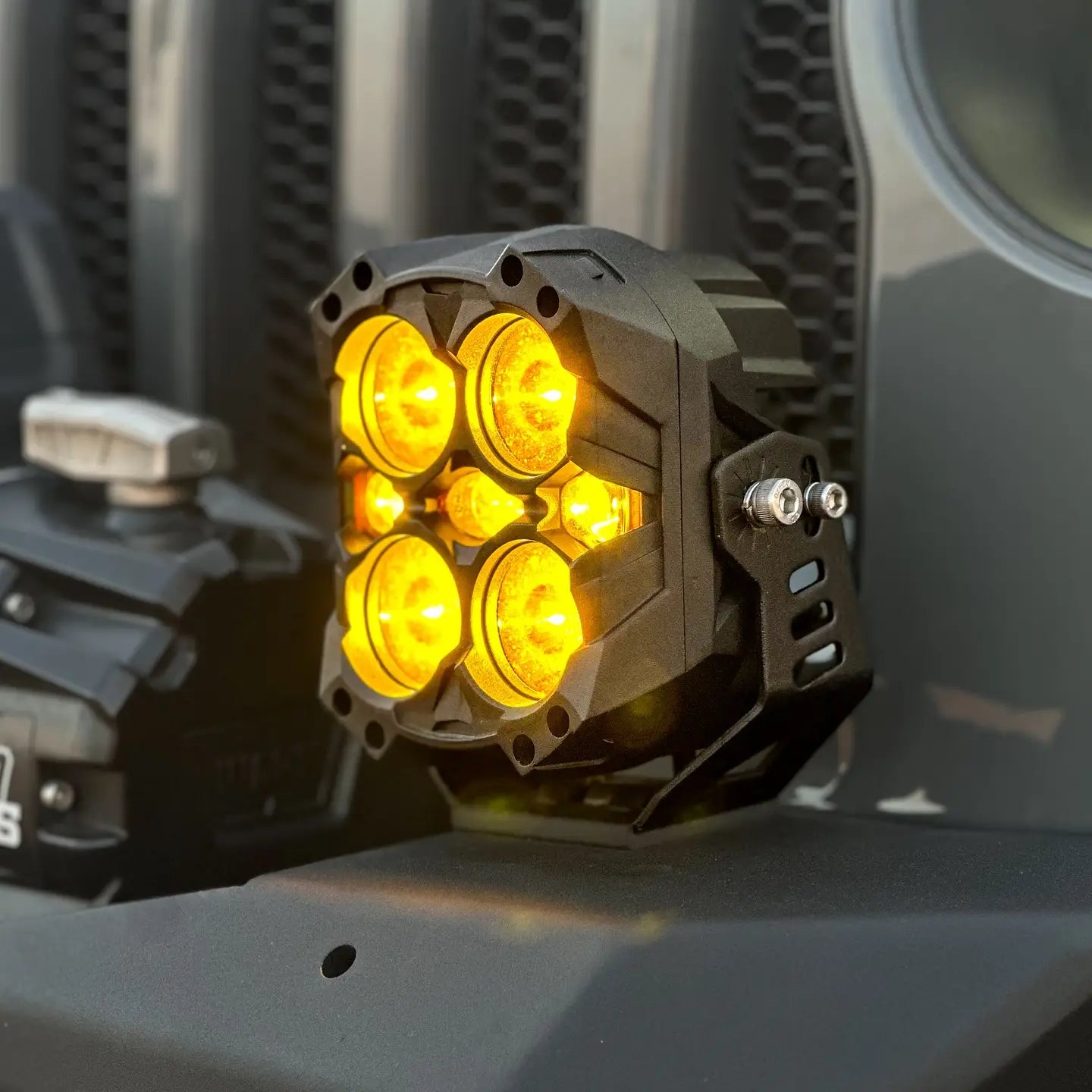
Yellow light (around 3000K) has a longer wavelength than white light (5500–6500K). Longer wavelengths scatter less when hitting water droplets, dust particles, or fog — which is why fog lights have been yellow for decades and why rally cars use yellow driving lights.
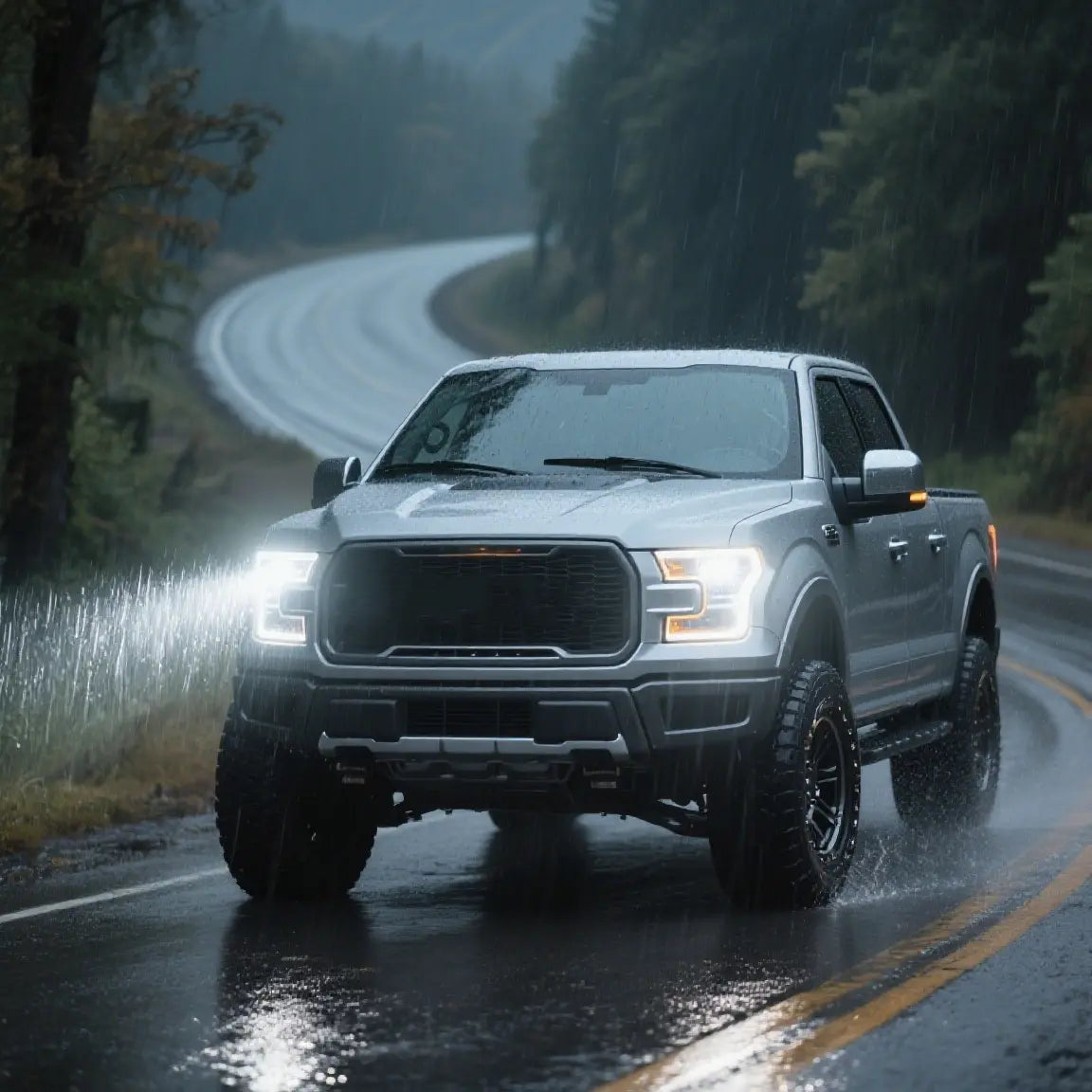
In practical terms: if you regularly drive in desert dust, coastal fog, mountain rain, or snow, yellow DRL makes you more visible to oncoming traffic and other trail users than white DRL would under the same conditions.
Why white looks better in clear conditions
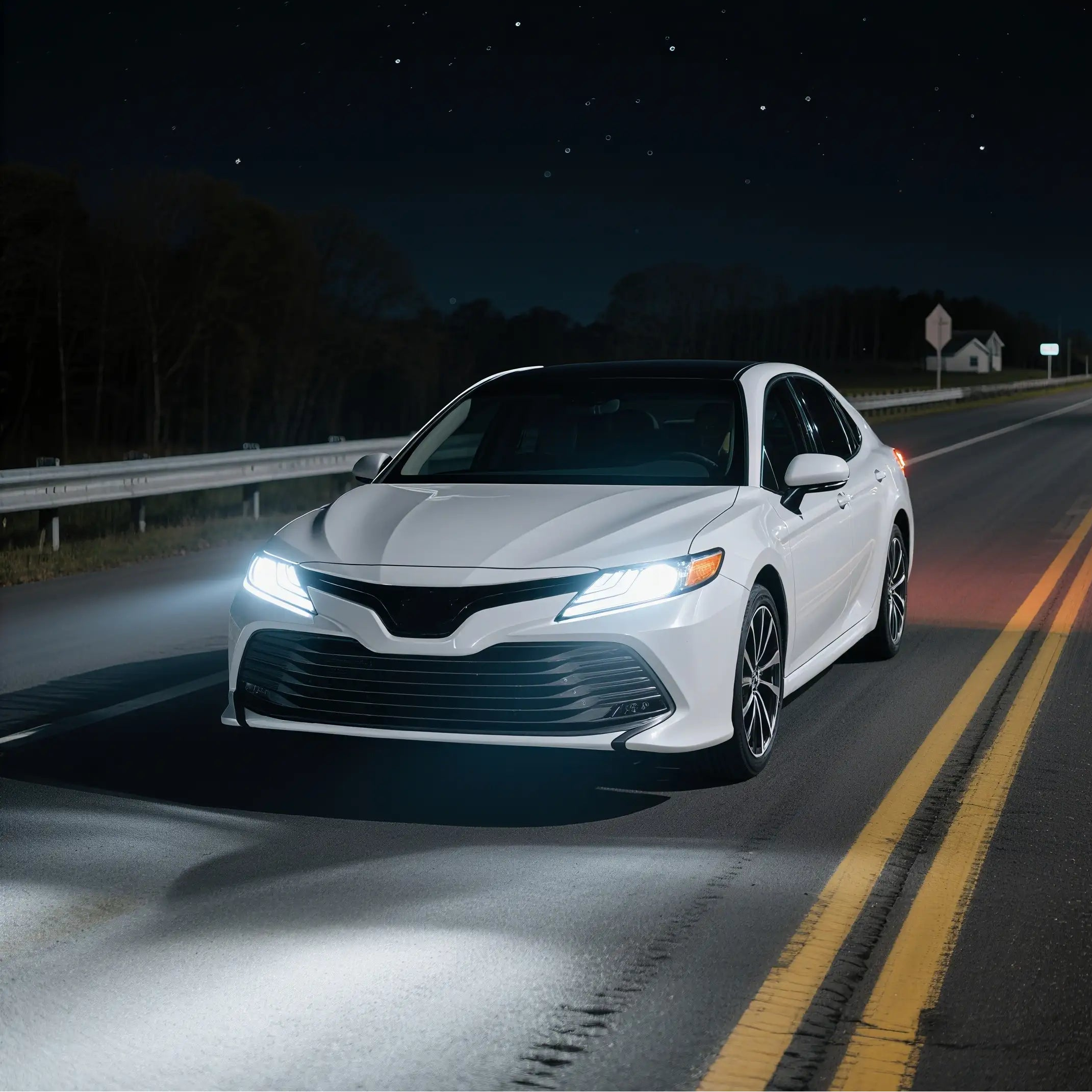
In clear weather on a dark trail or at a show, white DRL looks cleaner, more modern, and more intentional. It reads as a design element rather than a utility light. Most builds in fair-weather environments default to white for this reason.
The case for switchable
The NOVSIGHT HALO Standard gives you both — yellow and white selectable from the controller. This is the most practical option if your vehicle sees genuinely mixed conditions across seasons or terrain types. You're not locked into one color based on where you happen to be buying the light.
What about color temperature and legality?
Both yellow and white DRL are legal for road use in all US states when used as daytime running lights at appropriate brightness levels. Neither color is restricted for forward-facing DRL applications. The restrictions that apply to pod lights relate to the main beam use on public roads, not the DRL.
Red DRL: When Does It Make Sense?

Red DRL exists in exactly one context: intentional stealth builds where the aesthetic is the point. If you're building a blacked-out rig — black wheels, black trim, blacked-out badges, tinted glass — a red DRL signature completes the look in a way that yellow or white DRL simply doesn't.
The NOVSIGHT HALO SE is the only pod light offering this specific combination: full-black housing (no silver trim ring) with a red/white DRL option. Both colors are independently switchable, so you can run white DRL for road use and red for show or trail.
Is red DRL legal on public roads?
This is the question everyone asks, and the answer requires care. In most US states, red forward-facing lights are restricted — red lighting is associated with emergency vehicles and traffic control signals, and most state vehicle codes prohibit non-emergency vehicles from displaying red lights visible from the front.
The HALO SE's red DRL is intended for off-road and show use. For street driving, the white DRL mode is the appropriate choice. Check your state's specific motor vehicle lighting regulations before using red DRL on public roads.
Why the HALO SE also makes sense on output alone
Beyond the DRL, the SE delivers the highest lumen output in the HALO lineup — the 6-inch SE at 80W and 8,160 lumens per light puts out more raw light than the Standard 6-inch at a lower starting price. If you're building a stealth aesthetic and want maximum output, the SE isn't a compromise — it's the strongest performer in the lineup.
DRL Wiring: How It Connects to Your Vehicle
Understanding the DRL wiring before you buy makes the installation significantly cleaner. Here's how it works in practice.
The ACC circuit: where the DRL connects
The DRL wire connects to your vehicle's ACC (accessory) circuit — the circuit that activates when the ignition is on. This is also commonly referred to as the parking light circuit or ignition circuit depending on your vehicle's wiring diagram, but they all refer to the same principle: a circuit that powers up with the vehicle and cuts off when it's switched off.
DRL is itself a type of ACC-powered load — it runs off the same type of circuit as your factory daytime running lights. Wiring your pod light DRL to the ACC circuit gives you automatic behavior: start the vehicle, DRL comes on; switch off, DRL goes off. No manual input required.
Your vehicle's wiring diagram (available free on model-specific forums for Tacoma, F-150, Jeep, 4Runner, and most popular platforms) will identify the exact ACC wire at your fuse box.
Manual switch: full control
If you prefer manual control over automatic, wire the DRL to a dedicated switch instead of the ACC circuit. This is common for builds where the DRL serves a specific purpose — show mode, trail identifier — rather than running all day. A switch panel with a dedicated DRL channel is the cleanest solution here, especially when running multiple pairs.
DRL and main beam independence
All three HALO variants wire the DRL and main beam as independent circuits. This means you can:
- Run DRL only (daily street driving, parking lot, show)
- Run main beam only (trail use without DRL)
- Run both simultaneously (most common night trail configuration)
The included harness handles this with separate output wires for each function. No additional hardware is needed for a single pair.
Running multiple pairs: how to sync dynamic DRL
The included HALO PRO wiring harness has a built-in sync function for a single pair: long-press the mode-switch button for 5 seconds to lock in the current animation mode. This covers most single-pair builds without any additional hardware.
If you're running two pairs of HALO PRO pod lights and want the dynamic DRL animation to stay in sync across both pairs, this requires a multi-way switch controller. The synchronization is done through the switch panel using the following procedure:
For toggle-style switch panels:
- Turn on the DRL (yellow wire) on both pairs
- Flip the white color-switch toggle to the ON position and hold for 5 seconds — synchronization begins
- Once sync is complete, flip the toggle back to OFF
- From this point, quickly toggling the same switch ON→OFF cycles through the DRL animation modes on both pairs simultaneously
For button-style switch panels:
- Switch the panel to Horn mode
- Long-press the white color-switch button for 5 seconds — synchronization begins
- Once sync is complete, short-press the button to cycle through DRL animation modes
- Keep the panel in Horn mode after sync — in Horn mode, a single short press triggers the mode switch. If you exit Horn mode, the button requires two presses (one open + one close to complete the circuit) to switch modes
How to Choose: A Decision Framework
Answer these three questions and your DRL choice becomes straightforward.
Question 1: What is your build's primary identity?
| Build type | DRL direction |
|---|---|
| Daily driver, mixed terrain, practical use | Static yellow/white switchable — HALO Standard |
| Show build, visual statement, trail identifier | Dynamic 7-mode — HALO PRO |
| Stealth / blacked-out aesthetic | Red/white static — HALO SE |
| Overlanding, expedition, all-condition use |
Static yellow/white switchable — HALO Standard or Dynamic 7-mode — HALO PRO if visual identity matters |
Question 2: Where do you drive most?
- Desert / dust / fog / rain → yellow DRL mode is the practical choice
- Clear conditions, paved roads, shows → white DRL reads cleaner
- Both regularly → switchable yellow/white is the only option that covers both without compromise
- Off-road only, trail and shows → red DRL is an option if stealth aesthetic is the goal
Question 3: How many pairs are you running?
- One pair — the included harness handles it. Long-press the mode-switch button for 5 seconds to sync the animation.
- Two pairs — wire both DRL circuits to the same ACC tap, or to the same switch channel for coordinated on/off control (Standard and SE).
- Two pairs with dynamic DRL (HALO PRO) — animation sync requires a multi-way switch controller. See the wiring section above for the full procedure.
- Three or more pairs — a switch panel with a dedicated DRL channel is the clean solution.
NOVSIGHT HALO DRL Comparison
All three HALO variants share the same IP68 housing and main beam optics. The DRL system is where they diverge. Here's a focused comparison on exactly that.
| HALO Standard | HALO PRO | HALO SE | |
|---|---|---|---|
| DRL type | Static | Dynamic sequential | Static |
| DRL colors | Yellow / White (switchable) | Amber (7 animated modes) | Red / White (switchable) |
| Mode count | 2 (yellow / white) | 7 dynamic modes | 2 (red / white) |
| Housing color | Silver trim | Silver trim | Full black |
| Street-legal DRL | ✓ Both colors | ✓ Yes | White only (red off-road) |
| Multi-pair sync | Same ACC tap or same switch channel | Via multi-way switch controller | Same ACC tap or same switch channel |
| Best for | Mixed terrain, daily use | Visual impact, shows | Stealth builds |
| Starting price | $299/pair | $369/pair | $229/pair |
Frequently Asked Questions
Will leaving the DRL on all the time damage the pod light?
No. DRL rings run at a fraction of the main beam wattage — typically 3–8W per light — and are designed for continuous operation. LED chips rated for 50,000+ hours handle daily DRL use without degradation. The DRL circuit is separate from the main beam, so running one does not stress the other.
Does the DRL need its own fuse?
The HALO Series wiring harness includes a shared in-line fuse covering both circuits. If you wire the DRL to a separate tap point, adding a dedicated 5A inline fuse at that connection is good practice and takes two minutes.
Can you see dynamic DRL in rain or bright sunlight?
Yes. The HALO PRO DRL ring runs at sufficient brightness to be visible in daylight including overcast and light rain. In direct sunlight the animation is less dramatic than at night, but the ring remains visible to other drivers — which is its primary safety function.
Can multiple pairs of pod lights share the same DRL circuit?
Yes. For the HALO Standard and SE, wiring both pairs to the same ACC tap — or the same switch channel on a multi-way panel — gives you coordinated on/off control. For the HALO PRO, the included harness has a built-in sync function for a single pair (long-press the mode-switch button for 5 seconds). Syncing animation across two pairs requires a multi-way switch controller — see the wiring section of this guide for the full step-by-step procedure.
Is red DRL legal on public roads?
Red forward-facing lights are restricted in most US states — red is reserved for emergency vehicles. The HALO SE's red DRL is intended for off-road and trail use. Switch to white DRL mode for street driving. Check your state's specific regulations before using red DRL on public roads.
What is the difference between DRL and ACC circuit?
DRL (Daytime Running Light) describes the function — a low-power light that runs during the day to improve visibility. The ACC (accessory) circuit describes where it gets power — the circuit that activates when your ignition is on. DRL is a type of ACC-powered load, the same way your radio and interior lights are. Wiring your pod light DRL to the ACC circuit gives it automatic on/off behavior tied to your ignition. Some vehicles label this circuit as "parking light" or "ignition" in their wiring diagrams — the terminology varies, but the function is the same.
Ready to Choose Your DRL Setup?
The short version:
- Daily driver, mixed conditions → HALO Standard — yellow/white switchable DRL, 5 beam modes on the 3-inch
- Visual statement, shows, trail identifier → HALO PRO — 7 dynamic sequential DRL modes
- Stealth / blacked-out build → HALO SE — full black housing, red/white DRL
Questions about wiring, fitment, or which setup works for your specific vehicle? Reach out at service@novsight.com.
Last updated: May 2026

Leave a comment
All comments are moderated before being published.
This site is protected by hCaptcha and the hCaptcha Privacy Policy and Terms of Service apply.